

A herd of Konik Ponies are helping to create the perfect habitat for nesting waders. Rosie Beetschen meets RSPB Insh Marshes Estate Operations Manager, Thijs Claes, to learn more about them
It’s a warm cloudy morning on Insh Marshes, and I’m being taken to meet some ponies.
The moment we are spotted at the gate, a dark, handsome pony comes trotting over.
“That’s Frazzle”, says Thijs.
Frazzle looks quite different to any other horse I’ve seen. His light brown legs are banded with black, and he has a thick black stripe down his back. Looking dramatic, and very much at home, he’s backed by the rugged hills rising out of the low fog. He is one of the Konik Pony herd living and grazing on the reserve.
Insh Marshes is a strip of fertile, species-rich marshland on the floodplains of the River Spey in the Cairngorms. This wetland is important: owned and managed by the RSPB, it hosts a large number of breeding birds each year, including the Red-listed Curlew.
Thijs Claes is the Estate Operations Manager on RSPB Insh Marshes. He’s invited me to join him today for his morning pony round to learn about the important role the Koniks play in restoring and maintaining this precious habitat.
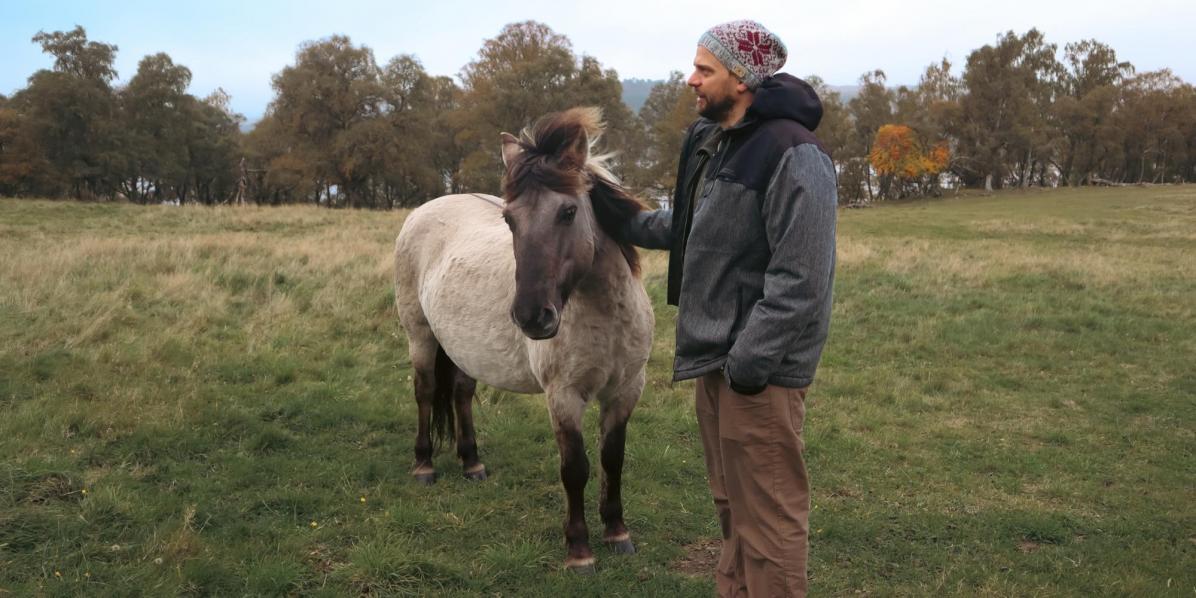
He has a few tasks to do. He checks the fences to make sure they’re still secure, examines their eyes, hooves and bodyweight, and checks their behaviour with each other. They are social animals so it would concern him if they weren’t together.
It’s also good for the ponies to have a positive relationship with people, in case they get ill and need to be treated. As a result of this need for human contact, the ponies are semi-feral. Not tamed, but not wild either.
The ponies look well and happy to Thijs, so we wander through the field to the next group of horses. We are beside a little wooded copse and only one can be seen, on the edge of the tree line. She whinnies loudly and before long, two more trot out to investigate.
I ask if the horses ever fall out.
“Out in nature they can choose their relationships,” replies Thijs. “So here you have to know who are friends.”
Three horses have now crowded around us as we speak, shoulder to shoulder – or more like belly to belly. They seem very comfortable with each other’s company.
After the checks - and a nose scratch with the ponies - we keep walking, scrambling down a steep slope past clumps of squashy bracken.
“The ponies have trampled this down a bit, which is good”, observes Thijs.
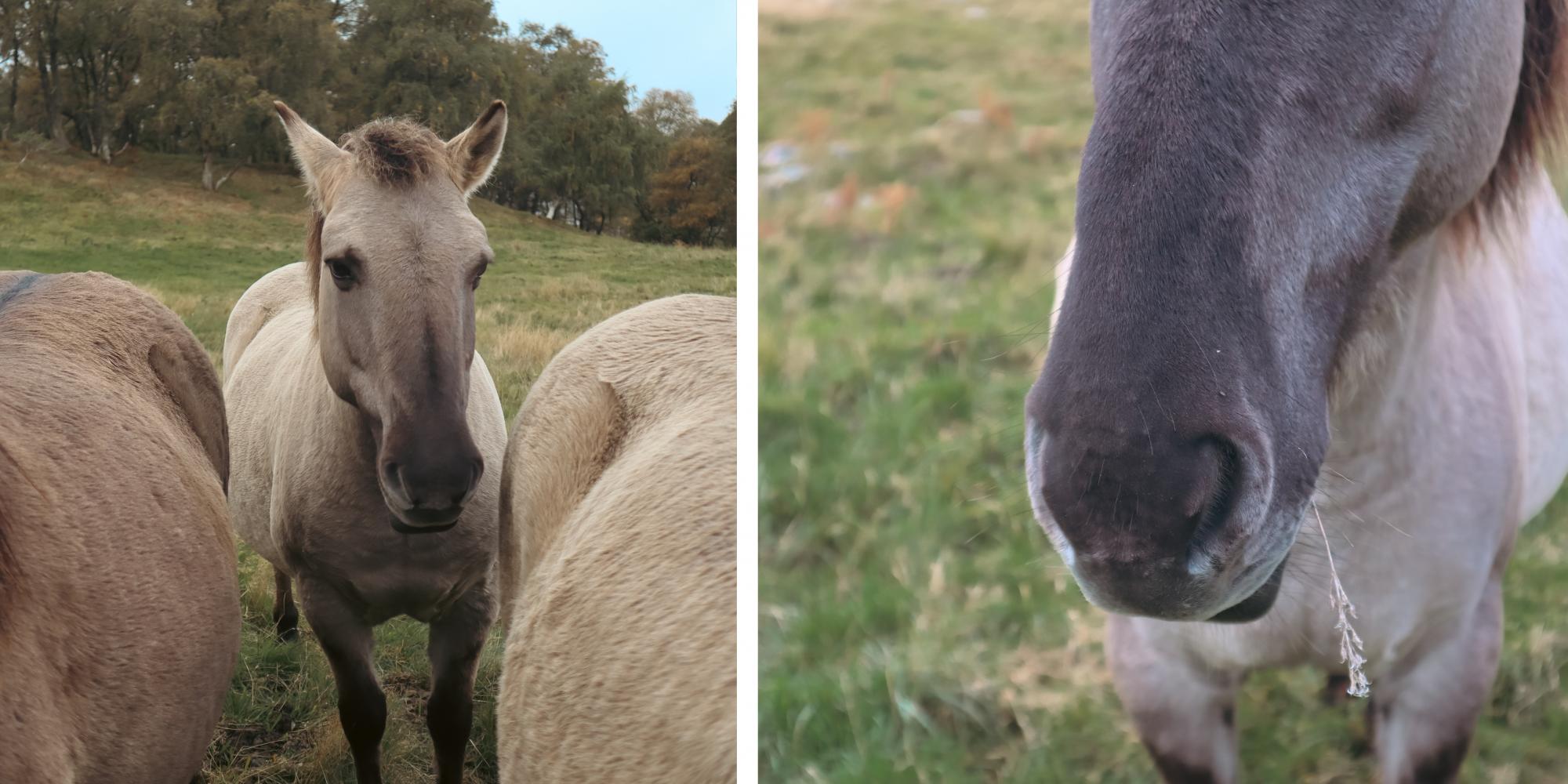 (left) 'shoulder to shoulder – or more like belly to belly' - the ponies crowd around us to say hello (right) one of the horses chews a stem of grass
If you don’t graze, or have disturbance on the land, you get dominant species that take over the whole area. They grow densely, and at a similar height, with not many flowers interspersed.
A well-thought-through grazing regime can really improve the breeding habitat for ground nesting birds. They like muddy areas and variation in the landscape. This makes it easier for them to hide from predators in the skies.
By grazing the land, the Koniks help make a safer nesting site. Of course, grazing is reduced during the breeding season itself, to lower the risk of the ponies trampling the nests.
The final group of ponies live near the river edge. It burst its banks in a recent storm, and Thijs takes note of the water level.
He tells me that reed beds and rushes had expanded into the wading bird habitat area, so the solution was to restore the hydrology of the area and bring in the horses.
At this point we’re distracted from our conversation by a squabbling of pink-footed geese winging their way overhead in a loose V-shape.
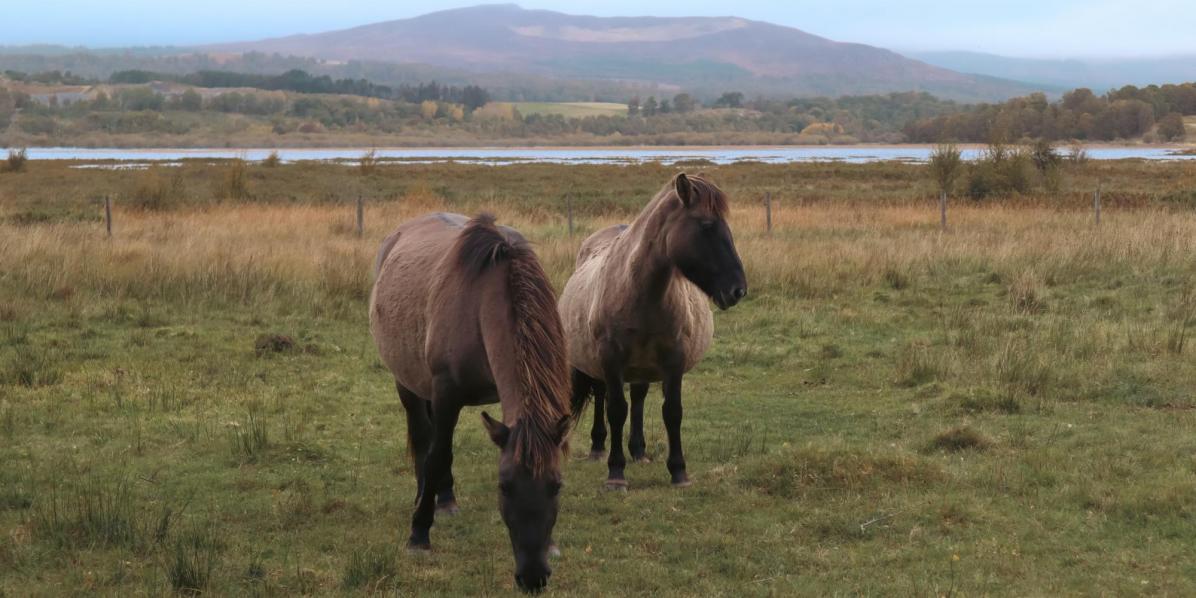
We wander over to the last group, who are already gathered at the fence edge, thick manes ruffling gently in the wind.The Koniks came as a trial project, funded by the EU LIFE 100% for Nature Project, set up to protect important sites for nature.
Koniks are well-suited to the boggy ground and wet conditions, with their wide hooves and thick fur. Their breed can easily fatten up over summer and slim down over winter, when there’s less to graze. The team at Insh Marshes previously trialled other ponies and cattle but they weren’t suited to the site’s conditions.
“We’ve learned so much about how to manage this habitat,” says Thijs. “We’ve also learned that it’s working, so we’ve kept the Konik Ponies on.”
Now the reed bed is being pushed back by their grazing and there’s better structure in the vegetation.
“We’re hoping that this will result in higher bird breeding numbers. We’ll see the impact in about five years.”
“And the more birds there are, the better they can protect their nests.”
Thijs finishes his checks and we leave through the field we came in. A quick wave at Frazzle as I pass, and it’s time to leave Insh Marshes. The sun has started to peek out and burn off the low cloud, and the ponies look beautiful against the hills.
They’re not just a gorgeous sight though – through their trampling and nibbling, they make a huge difference to this vitally important habitat, and the endangered birds they share their home with.
Ellie Dimambro-Denson, Cairngorms Connect Monitoring Officer, looks back on ten years of protecting and restoring the rare and delicate Twinflower


