

We head to RSPB Scotland Insh Marshes in the south of the Cairngorms Connect Partnership to hunt for a very rare Hoverfly
“Stop! There’s one!” Gen is peering into the undergrowth by the path.
“Oh no, it’s not – false alarm!”
Our little group keeps moving, eyes peeled.
We’re on the hunt for the rare Aspen Hoverfly, and it’s a little like searching for a needle in a haystack.
Aspen Hoverfly are a critically endangered invertebrate, but some can still be found in the Cairngorms Connect Partnership landscape. Today we’re at RSPB Scotland Insh Marshes in the south of the partnership where some fallen Aspen deadwood has been identified by volunteers as potentially viable breeding spots for the Aspen Hoverfly.
It’s our job for the day to visit each of the sites to check their viability. We are a small group of volunteers led by Insh Marshes Warden, Julie Ellis, with support from Genevieve Tompkins, Project Officer for Rare Invertebrates in the Cairngorms (RICs).
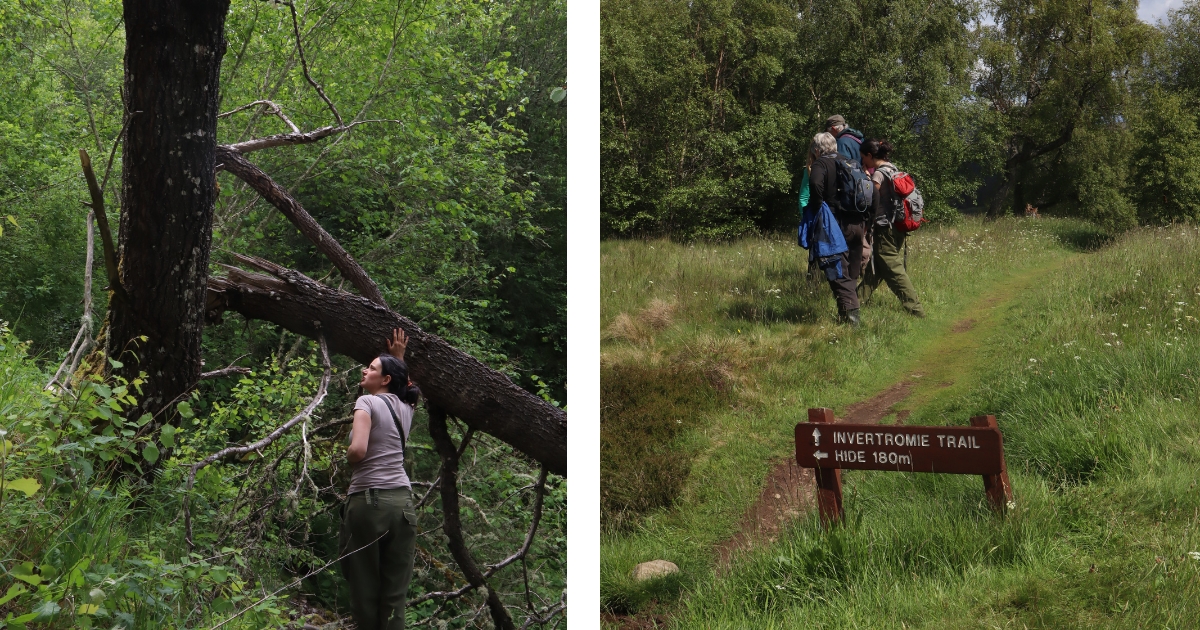 Images: (left) Gen examines a fallen Aspen (right) the group try to spot an Aspen Hoverfly in the flowers by the Invertromie Trail
The weather is indecisive: Insh Marshes is washed in warm sunlight as we head out, but wind regularly drives in clouds and showers. This is a concern for us, as Aspen Hoverfly are most easily spotted basking in sunny patches.
The next potential spot marked on our map is down a sheer slope. The Aspen tree has fallen dramatically and now lies vertical, but up at head hight. Genevieve looks closely at the trunk , crumbling a little bark in her hand, before sniffing the exposed patch. It would seem a very unusual thing to do to an outsider, but this is actually a pretty reliable way to identify if Aspen Hoverfly might be present.
The larvae of the Aspen Hoverfly live in the rot layer between the bark and the harder wood inside, called the cambium. These rotten conditions only last a few years before the wood dries out, so there’s only a small window of opportunity for the invertebrate. The rotting cambium leads to a very distinguishable fermented smell, and that’s what we’re sniffing for today.
This tree we know had Aspen Hoverfly living in it two years ago, but it’s now too old and dried out. However, Gen spots a thriving ant’s nest under the bark; it’s still a great habitat for other invertebrates.
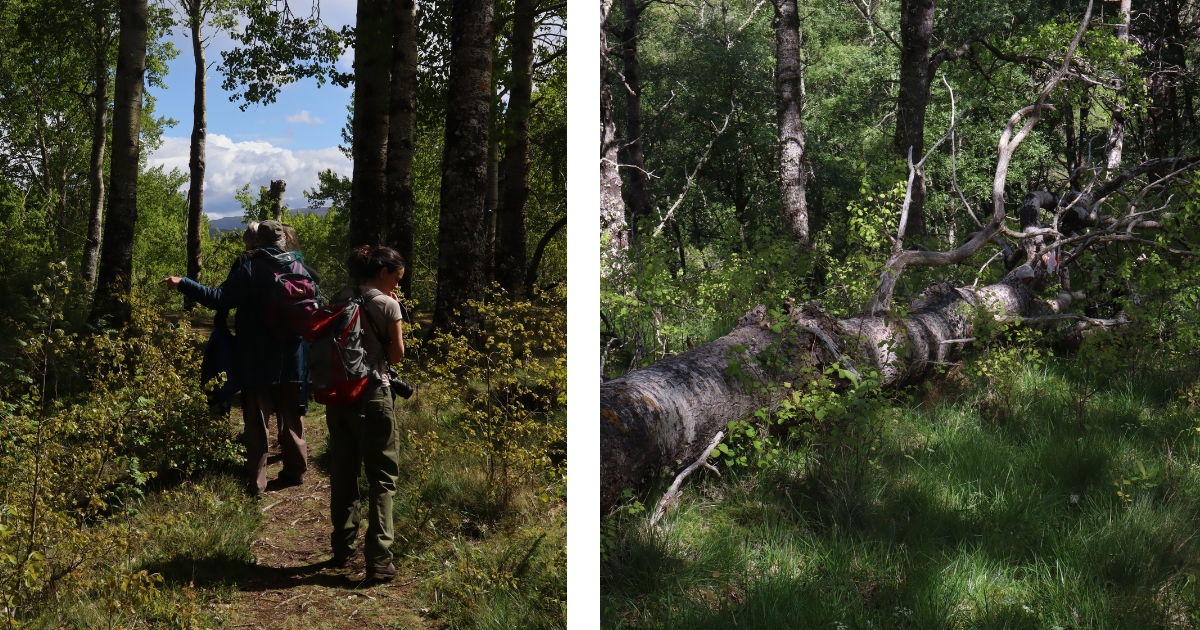
Images: (left) the group walk through dappled sunshine in the woods (right) a fallen Aspen might be a viable spot for breeding
We move on to a bright clearing dotted with the white-flowered pignuts, a favourite of the Hoverfly. The sun has briefly re-emerged and dapples light down on us as we walk. The next log is down a little from here, according to the map, and we have to fight our way through tightly packed Aspen suckers, the new shoots of the tree.
“I’m blown away by how many suckers there are”, says one of the volunteers, who knows this area well. This clearing has changed a lot in the past few years, as a result of the deer-stalking efforts as part of Cairngorms Connect’s Deer management work. With reduced browsing by deer, new shoots can survive, grow, and will one day fall and rot to become a new place where Aspen Hoverfly can breed.
New green leaves shake in the wind, and a family of Longtail Tits swoop overhead.
“Look at the abundance of nature when you bring lost processes back in”, says Gen.
Unlike the earlier log, the fallen trees in this part of the wood are too fresh; they’ll need a few more years on the ground for the rot to develop and become the perfect habitat for the Aspen Hoverfly. It’s an important reason to leave fallen deadwood where it is - even after dying it can foster so much life.
We have one more area on the map to check. We cross a heather-clad meadow and turn down a wooded path. We have to duck through branches to reach this final clearing. At the centre lies a gnarled, fallen Aspen.
A quick search and we begin to spot some very hopeful signs. We find an old pupal case an Aspen Hoverfly hatched from, small and brown and unassuming, tucked into the crevice of the log. On the side of the log is a patch that’s dark and wet-looking – finally, some evidence of the rot we’re looking for.
We take turns to give it a sniff. It’s sweet and earthy and quite lovely. This is a viable breeding spot for Aspen Hoverfly.
.jpg) Image: a brown and grey Aspen Hoverfly perched on white pignut flowers Credit: Genevieve Tompkins
Image: a brown and grey Aspen Hoverfly perched on white pignut flowers Credit: Genevieve Tompkins
The group of us stand sentry around the log, waiting to see if we can spot an adult fly. Lunchboxes and flasks of tea emerge from bags. It starts to drizzle, gently. Half an hour passes with no luck, and it’s time we were heading back.
As we walk back down the lush path of the Invertromie Trail, the clouds finally release the sun, lighting up the foliage a vivid green. And it’s not long before –
“There’s one!”
Gen is pointing to a patch of white pignuts where a brown and grey Aspen Hoverfly is feeding on nectar. She is newly hatched and shiny in the sunlight.
It feels like the end of a treasure hunt, and it’s a hopeful indication that this rare insect can survive – and will one day thrive - in our wild landscape.
Find out more about the work being carried out by Rare Invertebrates in the Cairngorms here!
We talk to staff and volunteers working on restoring and researching the buried graveyard at Invertromie.


