We talk to staff and volunteers working on restoring and researching the buried graveyard at Invertromie.
Many might not even know it’s there. To the passing walker, it can look like a grassy field with rough drystone walls. Beyond, RSPB Scotland Insh Marshes stretches out, under the watch of distant mountains.
Jan is a local volunteer: “I do a lot of walking around here because it’s not too far from home, and I didn’t even know this existed. So, I came down to look. It’s really interesting, it’s something unusual.”
Jill Harden, RSPB Reserves Archaeologist for Scotland and Northern Ireland, agrees that this is an unusual place.
“The one thing that Insh Marshes has that I think is unique across the whole of the UK RSPB reserves is the fact that we actually have a graveyard in our care.”
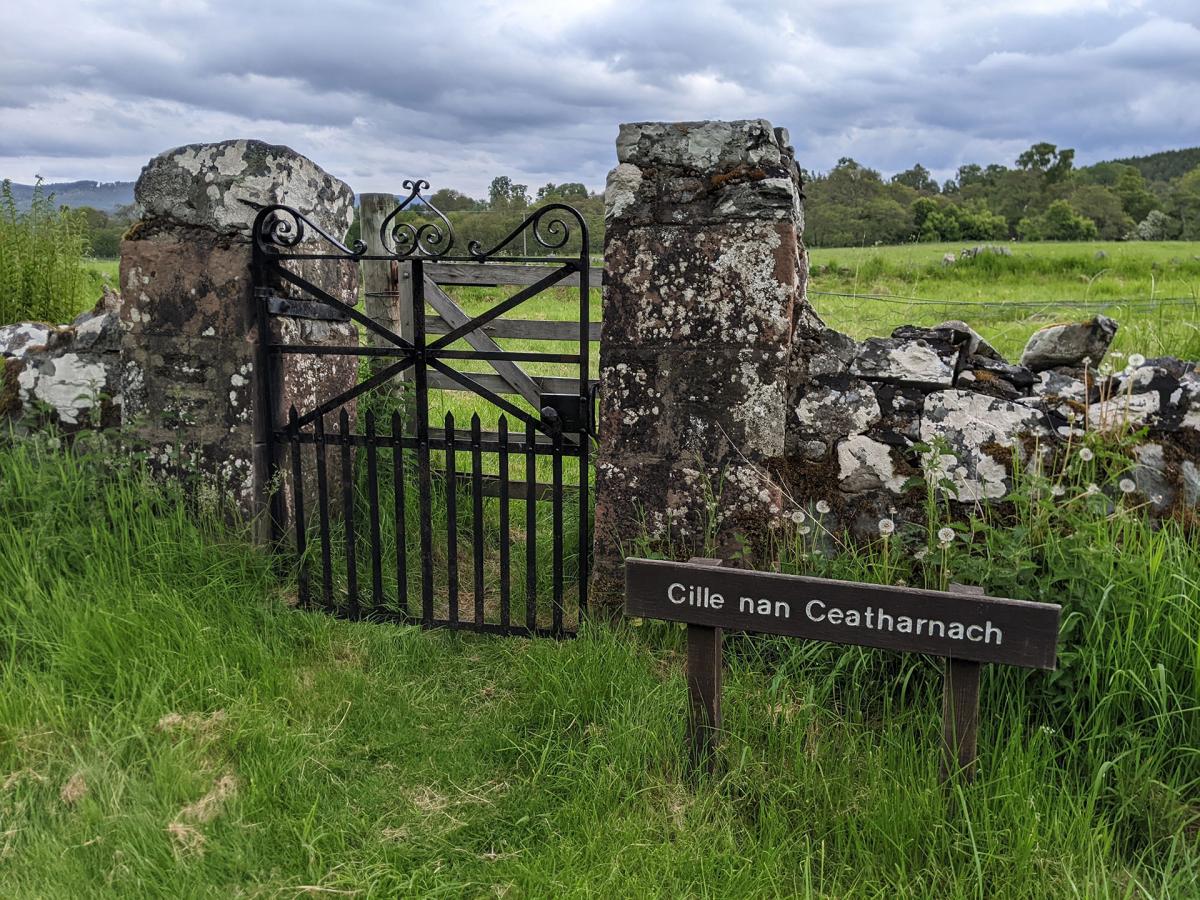
This is the graveyard at Invertromie, named Cille nan Ceatharnach on the original OS maps, found on Insh Marshes in the southern end of the Cairngorms Connect Partnership. It’s at the centre of a project long in the making.
In the 1970s a volunteer at Insh Marshes, who was also an archaeologist, was interested in finding more about the area, and recorded the graves as she could see them. But a few years ago when Jill and Karen Birkby, site manager for Insh Marshes, visited, only two of the slabs could still be seen.
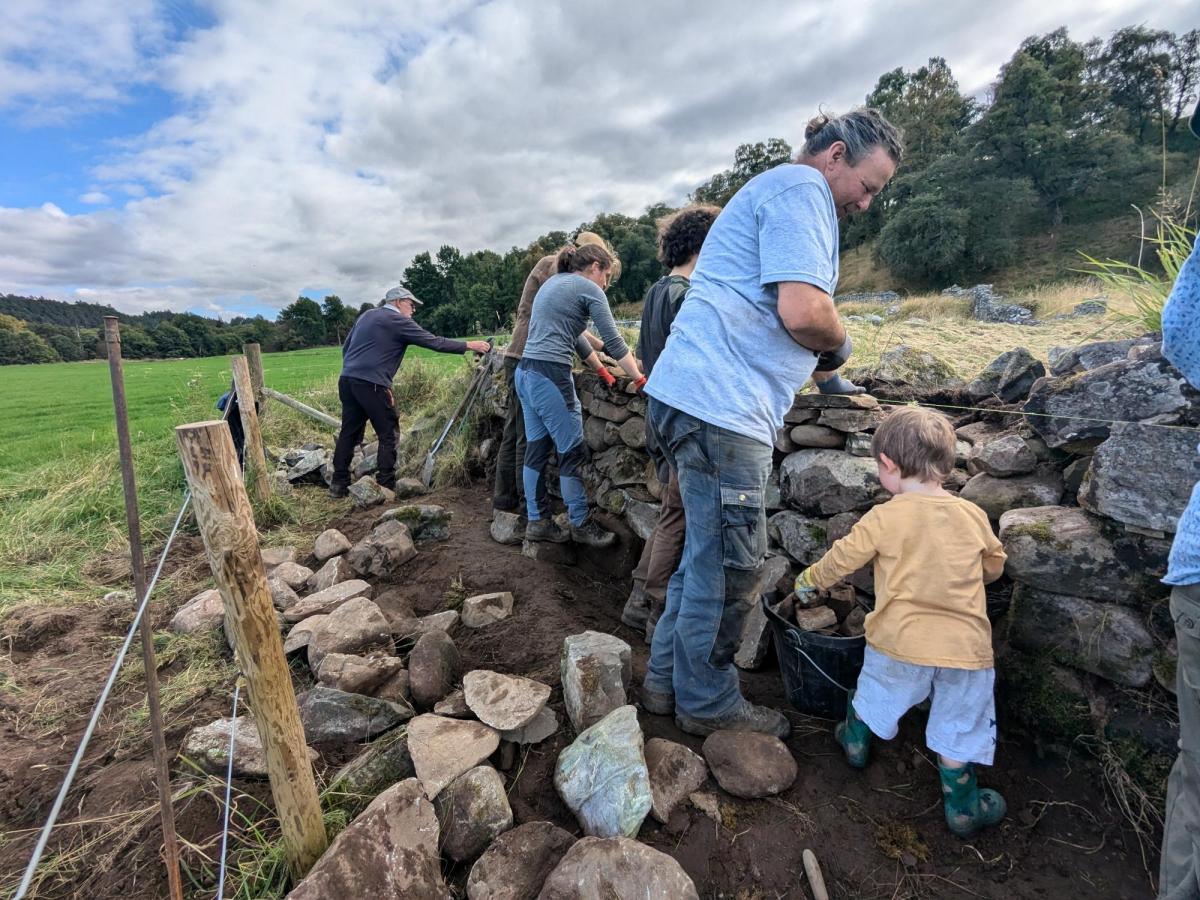
The Insh Marshes reserve team has committed to strimming and maintaining the Graveyard throughout the year, in collaboration with the group of local volunteers. This work includes paying for a professional to gradually repair the dry stane walls, while local blacksmith Davie Cameron generously donated and installed a set of iron gates.
“We tried to work out how to involve local volunteers and make it a community heritage project”, explains Jill. “For the past five years we’ve tied in with the Badenoch Heritage Festival, with day events sharing dry stane dyking skills and working on the graveyard site.”
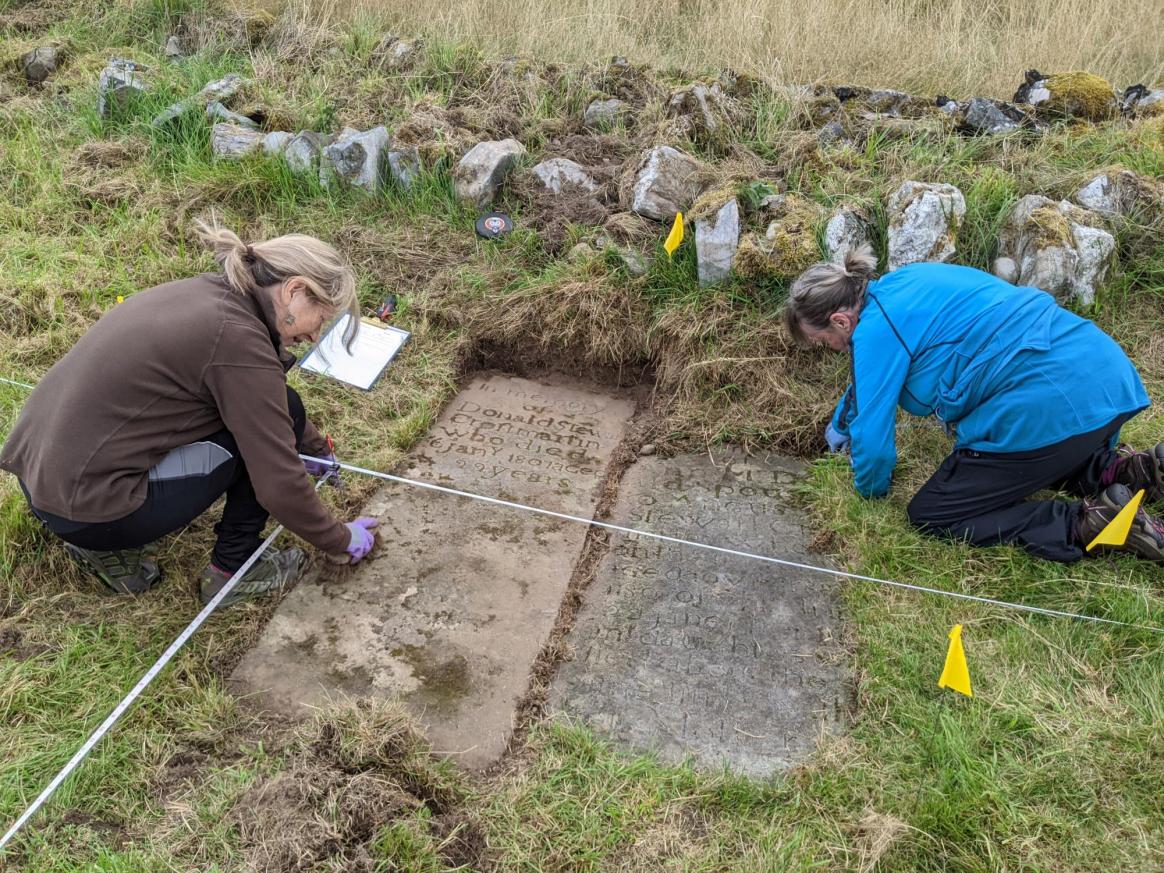
They have several sessions a year where reserve staff come down to strim and a group of volunteers survey for the hidden grave slabs, reveal them and then record them.
“We know that the graveyard was in use in the late 1700s and early 1800s through to the last recorded burial in 1921. “It’s very much a place that we need to take care of.”
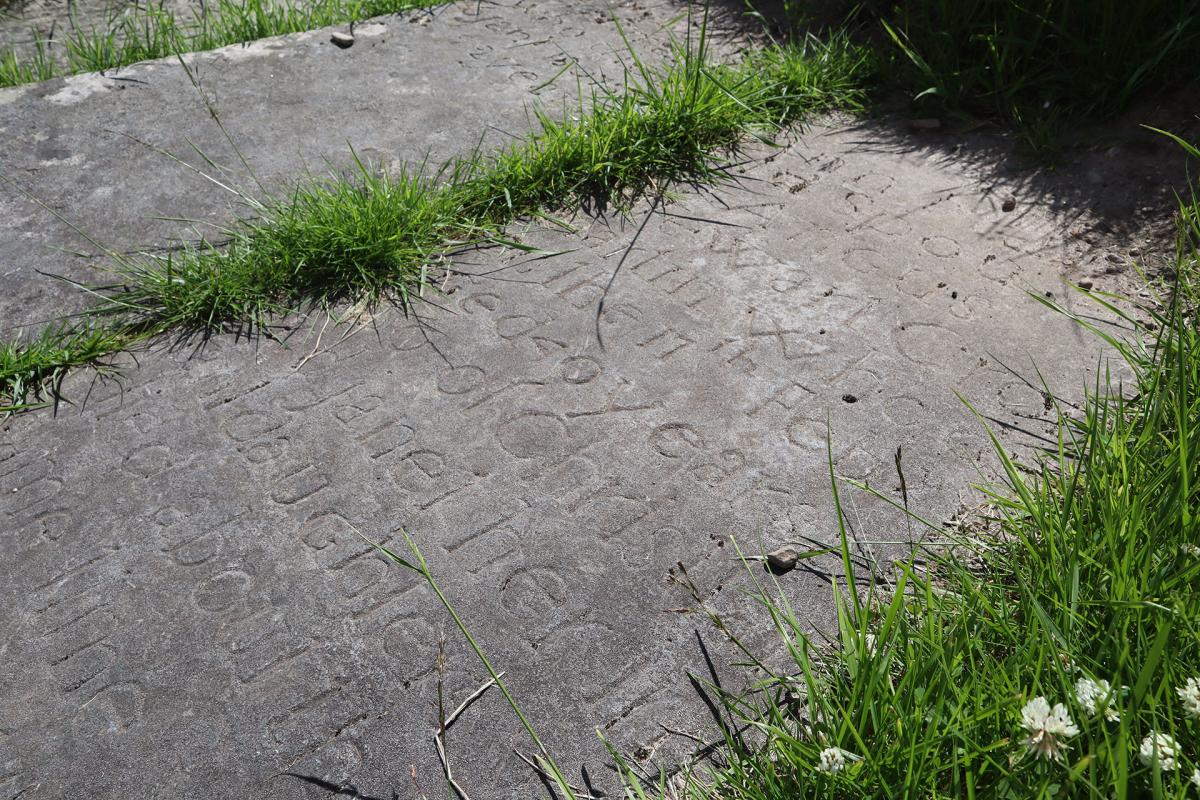
Image: Detail of two of the most complete grave stones at the site, of Archibald Stewart and Angus Stewart.
Alison, a volunteer, has been tracing two families whose gravestones are most complete.
“I started with Archibald Stewart and found out that he was the father to the name on the other grave, Angus Stewart.”
Archibald Stewart lived with a woman named Isabelle MacPherson at Croftmartin, near Insh village. They were married at Tom-fad, in Glen Feshie.
“It was an old settlement”, says Alison, “you can still find traces of the buildings up there!”
Shirley has a personal reason for volunteering: “I’m from the area. I used to live in Insh and I knew some of the names like Croftmartin and so on. I was interested to know if anyone buried here were my own family. I was interested in the jobs people did then as well, apart from crofting.”
Image: A group of people learn about dry stane dykes from a professional craftsman as they work together to restore the walls of the graveyard.
There’s hope to uncover even more stories from the graveyard. Volunteers Andy and Alison are continuing the genealogical research, and local historian Mary has just joined in the search too, with the hope to make this information publicly accessible in some form.
This year, the group were able to obtain a grant from the Badenoch Heritage Group and the Gibson Estate for a ground-penetrating radar survey to look down through the ground.
“We’re not excavating the graves”, explains Jill. “What we’re interested in is revealing the slabs and the headstones.”
“We’ve got the results and we are translating them to points in the graveyard to do more probing and potentially turf removal.”
Cairngorms Connect has a 200-year vision of landscape restoration and projects like this one at Insh Marshes are a vital part of this, as Jill explains.
“Quite often, when it comes to landscape-scale restoration, people can feel like it’s nothing to do with them, that we’re just trying to return to nature rather than seeing that there is a connection between nature and people.”
“By telling stories of past land use, we create that connectivity between people who’ve used and changed the landscape over the last 10,000 years and people today.”
Discover more about the graveyard and the results of this survey at this year’s Badenoch Heritage Festival!
10am – 12:30 pm, Friday 18th of September, at RSPB Insh Marshes
Click here to find out more and book your place!
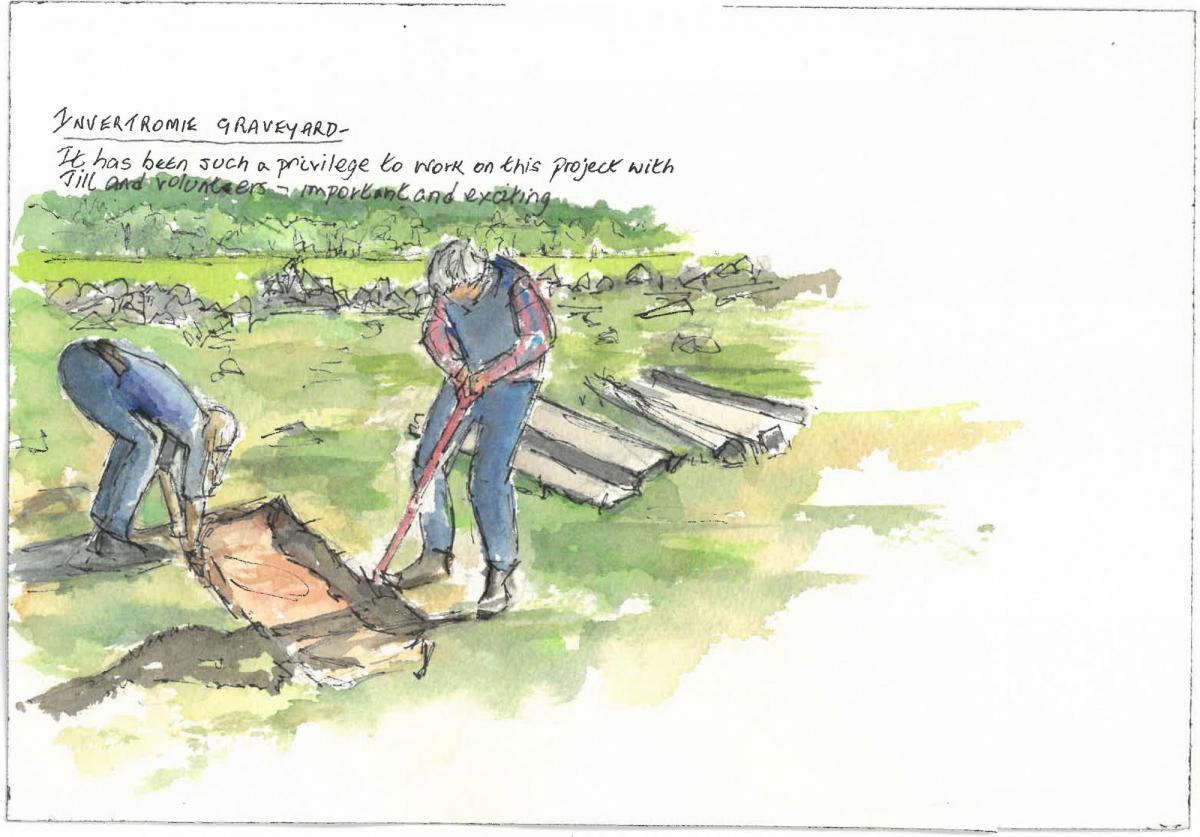
Image: Painting by Kate Fowler depicting her time volunteering at the Graveyard.
We talk to staff and volunteers working on restoring and researching the buried graveyard at Invertromie.